by April C. Armstrong *14
In this week’s installment of our recurring series, a student’s leadership is recognized, a visitor to Princeton describes a pitiable appearance, and more.
May 20, 1937—The Princeton Alumni Weekly reports on Theodore H. von Laue ’39’s leadership in collecting leftovers from the eating clubs to donate to a local social service agency. A report in the New York Times has noted that he was trained to do this sort of work in Germany, though the Nazis use leftover food for other purposes.
May 21, 1998—Local residents weigh in about the plans for a new campus center at Princeton University at a town meeting. Many disapprove of a proposed arcade and sign on the north side of the building, for which the University has requested a zoning variance. Both students and townspeople are united in their negative views of the proposal. Former student body president Jeff Segal ’98 says, “I haven’t seen a structure so many students hated.” The town approves the plans for the building, but not for the arcade and sign. The University will not be allowed to put a large insignia on the south side of the building, either, because this is also judged to effectively be a sign.

May 23, 1845—Biographical Sketches of the Founders and Principal Alumni of the Log College is available for sale in the Princeton bookstore.
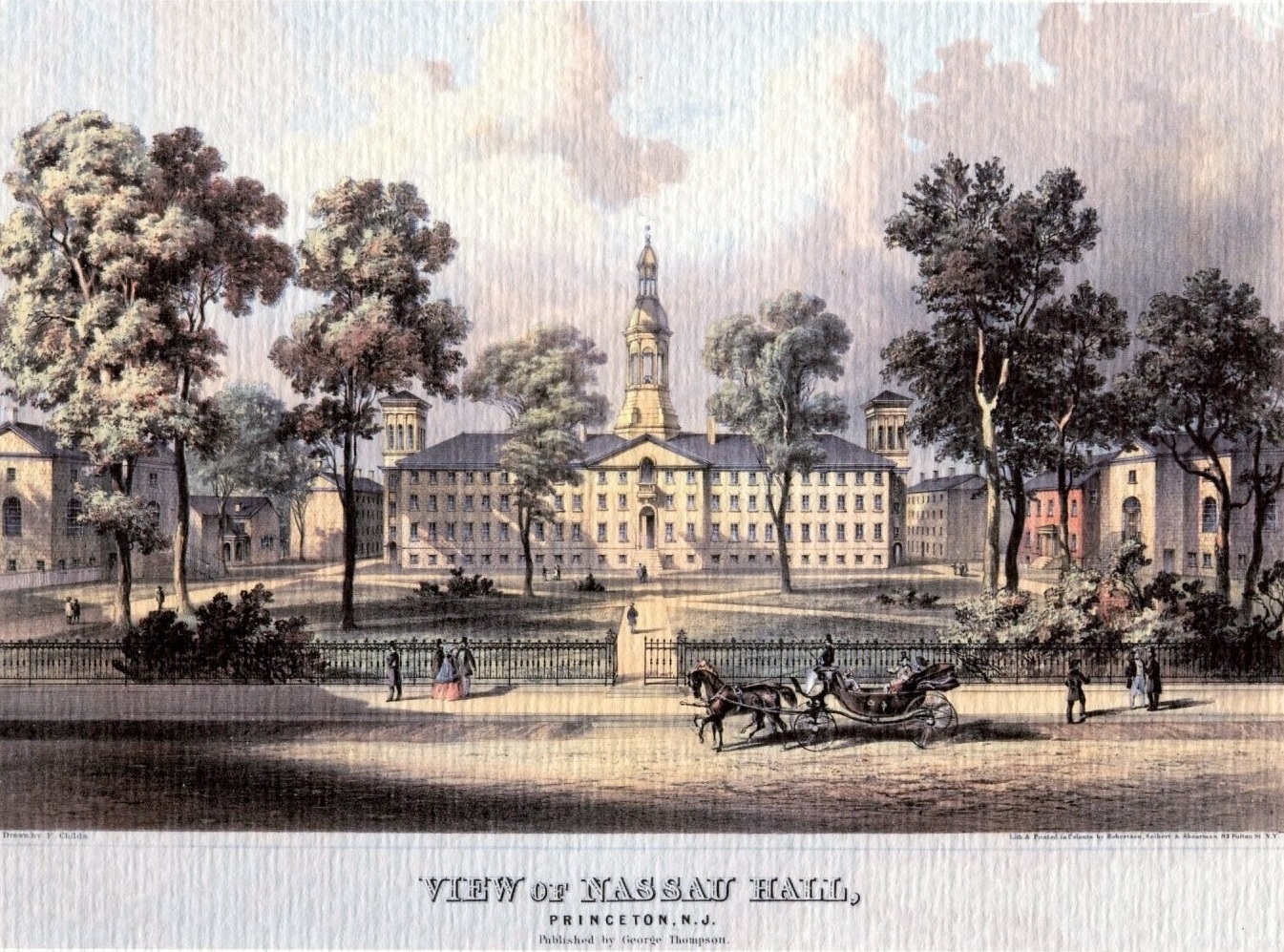
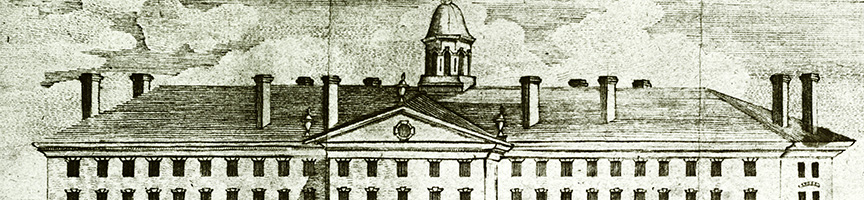
May 24, 1794—A visitor to Princeton describes Nassau Hall:
In front is a large yard, shut off from the street by a brick wall, with pilasters at equal distances supporting wooden urns painted gray. This yard is not well kept and is covered with the dung of the animals that go there to browse on the grass. In the middle is an old iron cannon, a four-pounder, minus its carriage. This cannon and the bad condition of the wall with several of the urns fallen to the ground give an unkempt appearance to everything, so that you reach the building with a feeling of vexation that the students should have such a bad example before their eyes.

Did you read the previous installment in this series?
Fact check: We always strive for accuracy, but if you believe you see an error, please contact us.
One response to “This Week in Princeton University History for May 18-24”
[…] Did you read the previous installment in this series? […]