
by April C. Armstrong *14
In this week’s installment of our recurring series, Japan offers a grant to Princeton, scientists gather in Iowa, and more.
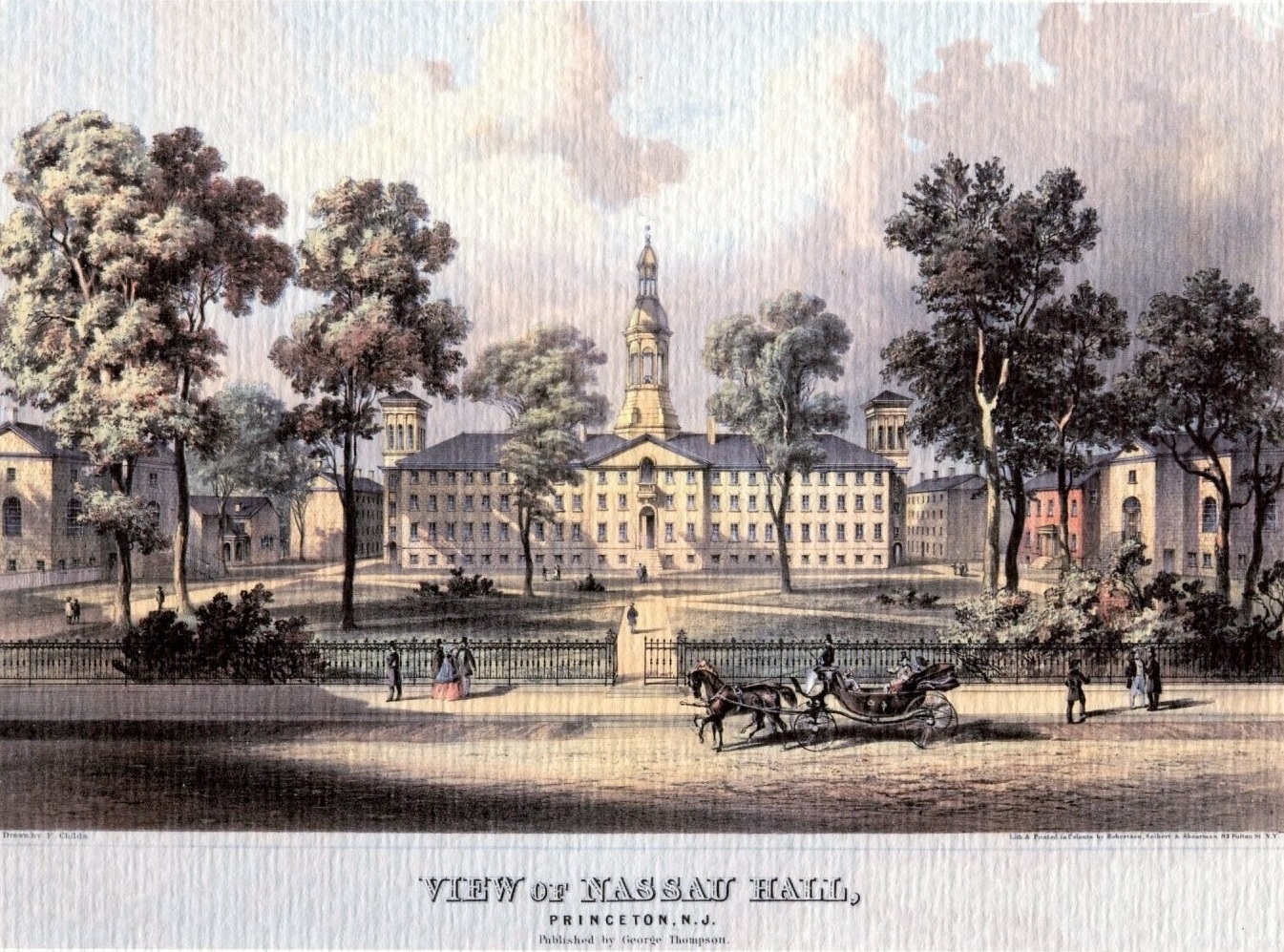
August 3, 1751—Governor Jonathan Belcher writes to Aaron Burr, saying Princeton is the best place to move the new College of New Jersey.
August 6, 1973—Japan has selected Princeton University as one of a small group of American higher education institutions that will each be awarded a $1 million grant to support Japanese studies in the United States. At Princeton, the grant will be used to set up an endowed fund to pay the salary of a professor in Japanese studies.

August 7, 1869—A group of faculty and students, who have been given a grant to collect scientific data, have gathered in Iowa to watch a total solar eclipse. One student will later write of the experience, “I scarcely remember any three more exciting minutes in my life than those of the total eclipse, if I except several minutes in which I was once held in a drowning condition at the bottom of a stream and the review of my life passed before me—moments that can have no parallel.”
August 8, 1955—A group of three alumni discover 5.5 million tons of marketable uranium in New Mexico’s Ambrosia Lake region, which will make them millionaires and secure the fortunes of many other Princetonians who invested in their company.
Did you read the previous installment in this series?
Fact check: We always strive for accuracy, but if you believe you see an error, please contact us.