By April C. Armstrong *14
In this week’s installment of our recurring series, Nassau Street draws criticism, a staff member sets off to help hurricane victims, and more.
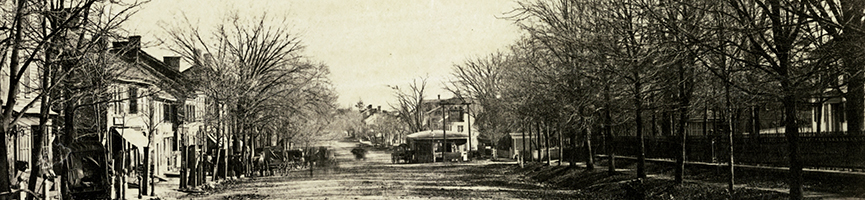
September 2, 1859—Locals complain that Nassau Street has become “intolerably dirty” and the dust should be swept up regularly.

September 3, 1922—The New York Times reports on Princeton’s unusual tradition of requiring graduate students to wear academic regalia in the Graduate College dining room.
The academic garb harmonizes with the atmosphere of the spacious hall… But, according to the graduate student himself, it requires experience and considerable ingenuity to keep long, ample sleeves from trailing in the soup or scooping up his neighbor’s jam when he reaches for the butter.

September 5, 2005—Office of Information Technology staff member John Green flies to Baton Rouge as a Red Cross volunteer, not knowing what his assignment will be. He will ultimately be assigned to the Procurement Team in Material Support Services, working 14-hour days for two weeks assisting Louisianans displaced by Hurricane Katrina in finding showers, toilets, food, water, and other supplies.
September 6, 1972—The Prince is produced using photo offset technology for the first time, a major technological advance from the hot lead letterpress used previously.
Did you read the previous installment in this series?
Fact check: We always strive for accuracy, but if you believe you see an error, please contact us.