-
Dear Mr. Mudd: Did Tailgate Parties Originate at Princeton?
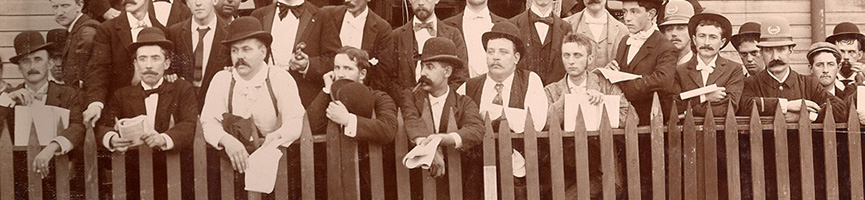
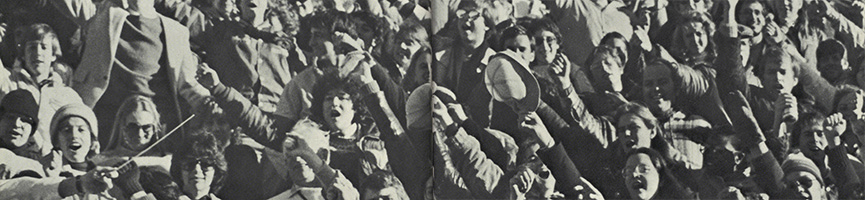
By April C. Armstrong *14 Dear Mr. Mudd, I’ve read that tailgating has origins in Princeton’s early football games, perhaps at the first intercollegiate football game against Rutgers in 1869. Is this true? Although we know many things about the first intercollegiate football game itself, we don’t actually know much about the 1869 event’s spectators.…
-
The CIA’s Quest for Mind Control : Piecing Together Project MK-Ultra and its Princeton Connections, Part II (MK-Ultra at Princeton University)
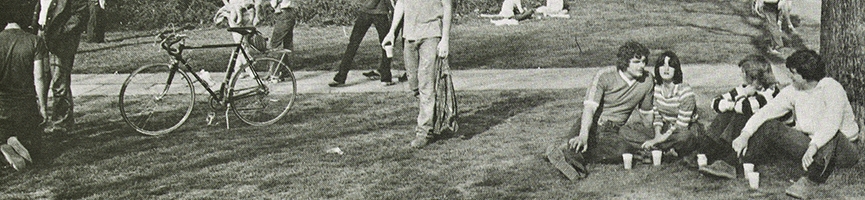
MK-Ultra was a human experimentation program illegally conducted by the Central Intelligence Agency (CIA). Its intent was to determine the usefulness of various substances for interrogations. Running from 1953-1973, the program employed secret dosing of unsuspecting persons with psychoactive drugs, especially LSD. MK-Ultra activities took place in a variety of settings where ordinary citizens became…
-
Dear Mr. Mudd: Where Did the Term “Bicker” Originate?

-
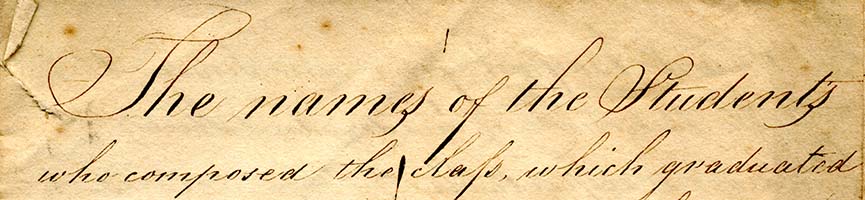
1827 Burn Book
-
WPRB’s 1970s Identity Crisis

Originally known on the AM broadcasts as WPRU, the station’s primary audience was the campus community at the time of its founding. When a new FM license greatly expanded the broadcast range in 1955, questions on WPRB’s identity came to a head: What was WPRB? Was it a college station and extracurricular activity or a…
-
Dear Mr. Mudd: What Is the Origin of the “‘Old Nassau’ Salute”?
-
Racial Segregation Propagandist Carleton Putnam, Class of 1924, Part II: Alumni Perspectives and Upholding Freedom of Speech (1970s)
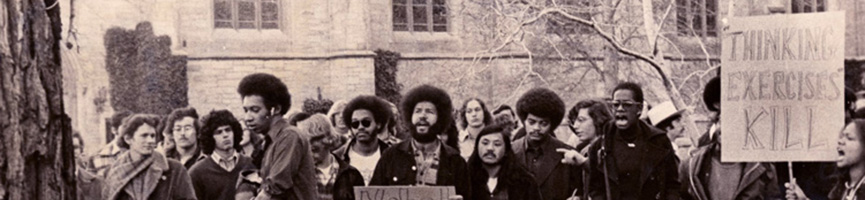
Integral to Carleton Putnam’s argument on race was the notion that the demographics of students at Princeton should remain genetically analogous to what was represented in the early days of Princeton; that is, Princeton should predominantly be composed of white men, preferably with familial connections to the school.
-
Racial Segregation Propagandist Carleton Putnam, Class of 1924, Part I: His Adversaries and Allies at Princeton and Beyond (1960s)
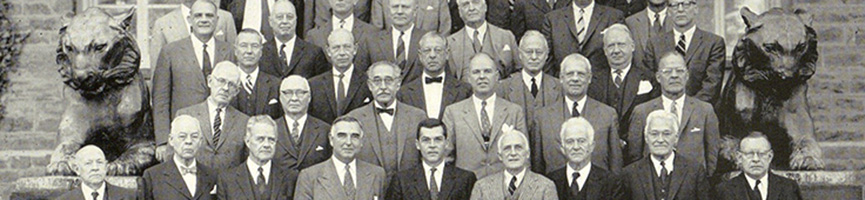
Beginning in the 1950s and continuing through the ’60s, Princeton University underwent drastic social change which reshaped thought about legalized segregation and discrimination against African Americans. During this time, Princeton confronted tensions between maintaining Princeton’s traditional demographics and allowing racially diverse applicants equality of opportunity.
-
My Travels with Darley
-
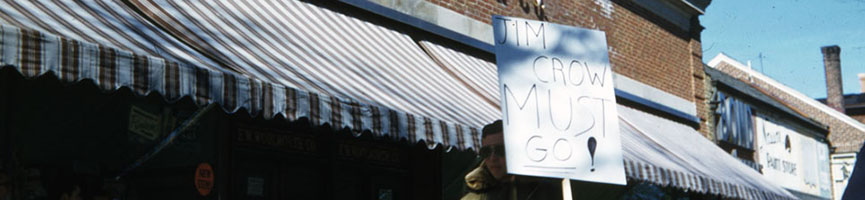
“I Found a Million-Dollar Bigot in a 5 & 10 Cent Store”: The Weekend Martin Luther King, Jr. Preached in Princeton University Chapel, Part II
This blog includes text and images drawn from historical sources that may contain material that is offensive or harmful. We strive to accurately represent the past while being sensitive to the needs and concerns of our audience. If you have any feedback to share on this topic, please either comment on a relevant post, or use our Ask Us form to contact us.